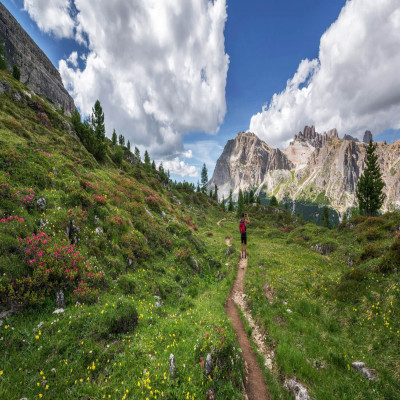
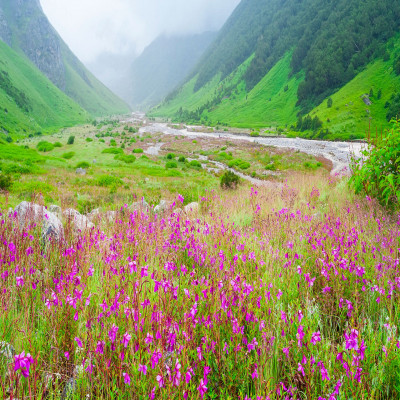
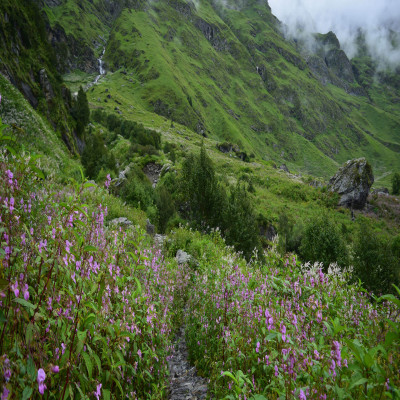
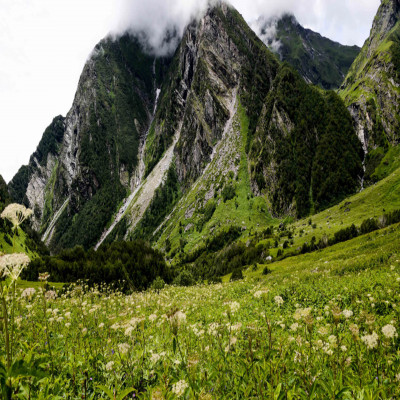
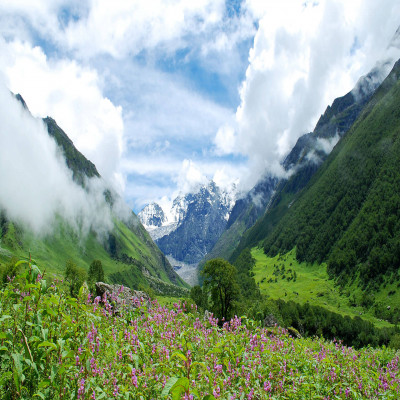
There is something about flowers that enthralls the human eyes and mind. How would you feel when you are surrounded by the beauty of alpine flowers all around? Well, it is not a fantasy as you can actually experience this in the Valley of Flowers National Park in North Chamoli, Uttarakhand. The meadows at this Indian national park can leave any person wonderstruck. A high altitude valley in the Himalayas, Valley of Flowers National Park should be on your bucket list if mountains make you happy.
The park was declared as a World Heritage Site in 2005 by UNESCO. If you plan to visit the Valley of Flowers National Park, then the best time is between July to September. The park opens on June 1 every year and closes on October 4. By the end of September, there are hardly any flowers, but the view is still captivating. If you want to enjoy the beauty of the flowers, the best time to visit are July and August. The entry timings are from 7 am to 5 pm. The entry fee is INR 150 for Indian nationals and INR 650 for non-Indians.
Once you have reached the Valley of Flowers National Park, it will take you five to eight hours to explore the park to its entirety. Since you won’t find anything to eat there, make sure you pack lunch, and some energy drinks to have a good time in the picturesque valley. Do not forget to carry back all the packets, wrappers, and waste with you and dump in a dustbin at Ghangharia.
History of Valley of Flowers National Park
The Valley of Flowers has been there since forever, but it wasn’t known much to the outside world because of its inaccessibility. The valley was discovered during the British Rule by three British mountaineers, R.L. Holdsworth, Eric Shipton, and Frank S. Smythe. These mountaineers lost their way after a successful expedition to Mount Kamet. When they reached the valley, they were beguiled by its floral beauty, and so, they named it ‘The Valley of Flowers.’
Upon its discovery, the valley started garnering attention and popularity among botanists, mountaineers, and travellers. Many florists have researched about the endemic alpine flowers in the valley and written books on the same. It was in 1980 when the valley was established as Sanjay Gandhi National Park by the Indian Government. In 1982, the park was renamed again as Nanda Devi National Park.
Major Attractions in and Around Valley of Flowers National Park
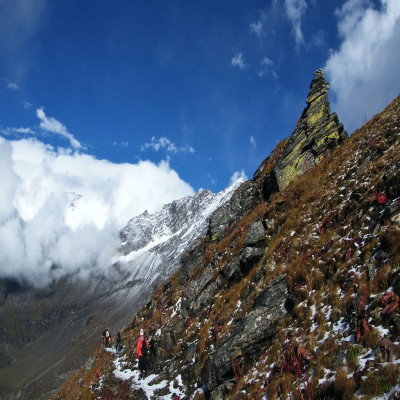
1. Trekking. The Valley of Flowers National Park trekking is famous among travellers. You must be fit to do this as you’ll have to trek for seven days. The trek is not challenging, but it is long, which requires a lot of endurance. You’ll have to start trekking at Ghangaria, where you will find various hotels and lodges for accommodation. Since you cannot stay at the Valley of National Flowers Park, Ghangaria is the best option to sleep and relax.
2. Nanda Devi Biosphere Reserve. If you are looking for places to visit near the valley of flowers, you must visit Nanda Devi Biosphere Reserve. A UNESCO World Heritage Site, the biosphere reserve, is the abode of a wide variety of flora. The dry conditions in the inner sanctuary make vegetation scarce, but you’ll spot species such as prone mosses, alpine, lichens, etc.
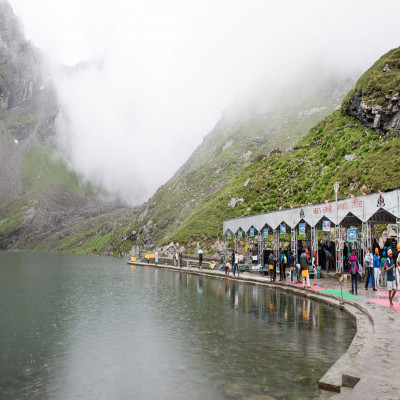
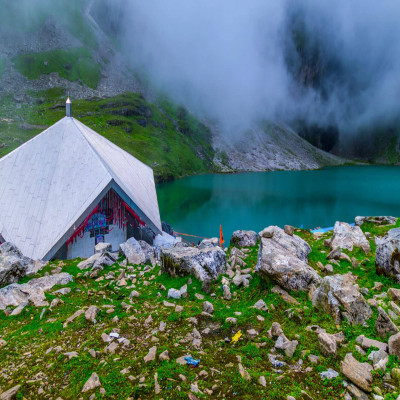
3. Hemkund Lake. While you are planning to visit the Valley of Flowers National Park Uttarakhand, you must visit Gurudwara Shri Hemkund Sahib that is located in the Chamoli district itself. The word Hem means ‘snow’ in Sanskrit, and Kund is ‘bowl.’ Devoted to Guru Gobind Singh, disciples from different parts of the country and abroad visit Gurudwara Hemkund and lake.
4. Exotic Flora and Fauna. One of the best things to do in the Valley of Flowers National Park is to spot some of the most exotic flora and fauna species. Although the density is not high, you may get lucky to see animals like the Himalayan black bear, tahr, red fox, leopards, etc. You will find different types of flora like Acer caesium, i.e., Himalayan maple, Sorbus Lanata, and herbs such as Nomochoris Oxypetala, Galium Aparine, Trillidium Govanianum, etc.
How To Reach Valley of Flowers National Park
Reaching the Valley of Flowers National Park is not an easy task. As mentioned above, the trek may last for seven days. Below is how you can reach the park via airways, railways, and roadways.
By Air. To reach the Valley of Flowers National Park via air, the nearest airport will be Jolly Grant Airport, i.e., Dehradun Airport. Located at a distance of 25 km from Dehradun, you will find flights from major cities such as Lucknow, New Delhi, and Srinagar. From Dehradun, you can either catch a train or a bus to reach Rishikesh. From Rishikesh, you’ll have to take a bus to Govind Ghat, which will take you around 12 hours. The distance from Govind Ghat to Ghangharia is 11 km. You can either trek or hire a shared taxi to reach Ghangharia. To reach the Valley of Flowers National Park, you’ll have to trek for another 3.2 km.
By Train. If you are planning to travel to the Valley of Flowers National Park via train, you’ll either have to deboard at Dehradun or Rishikesh. From Rishikesh, you’ll have to reach to Govind Ghat via road. You can catch a bus or hire a taxi to get there. Take a shared taxi to reach Ghangharia. Trek for 3.2 km to explore the Valley of Flowers National Park.
By Road. Once you have reached Rishikesh, you will have to book a cab or catch a local bus to reach Govind Ghat. From Govind Ghat, you can take a shared taxi to reach Ghangharia. After entering Ghangharia, you’ll have to trek for another 3.2 km to explore the beauty of the Valley of Flowers National Park.
You can plan your trip and create your own route to the city with Adotrip’s technically driven circuit planner. Click here